

ASTM A270
ASTM A270 Sanitary Stainless Steel Tubing
ASTM A270 is a specification covering seamless, welded, and heavily cold-worked austenitic and ferritic/austenitic stainless steel sanitary tubing intended primarily for applications requiring high levels of cleanliness, surface quality, and corrosion resistance.
ASTM A270 Sanitary Stainless Steel Tubing is widely used in industries such as food processing, dairy, beverage production, pharmaceutical manufacturing, biotechnology, and other sanitary process applications.
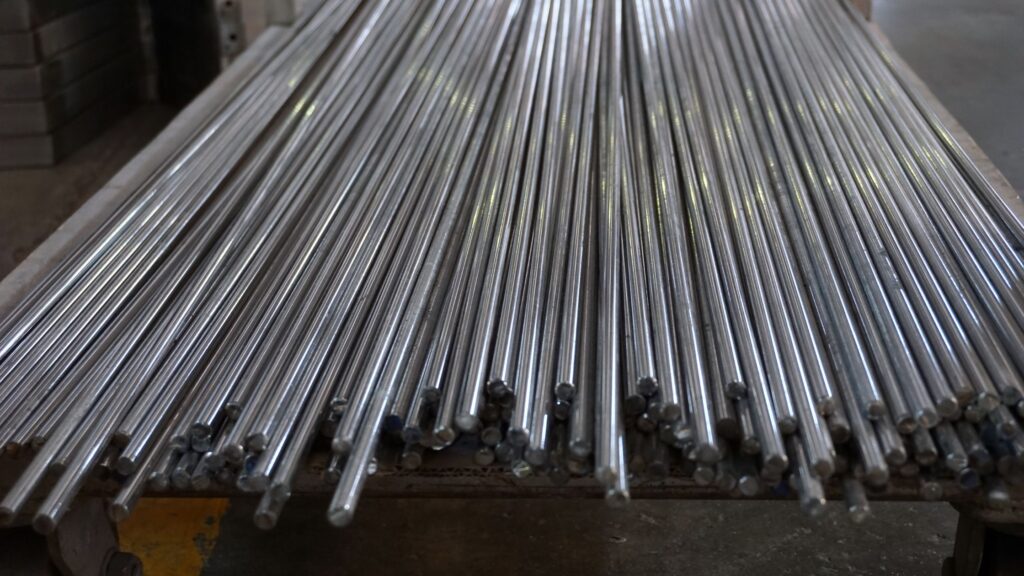
ASTM A270 Specification
ASTM A270 establishes requirements for sanitary tubing manufactured from specified stainless steel grades. The specification focuses on material quality, dimensional requirements, surface finish, mechanical properties, and testing.
The standard is particularly relevant where tubing surfaces must be suitable for cleaning, sanitization, and hygienic processing.
Key ASTM A270 Specification Requirements
| Property | ASTM A270 |
|---|---|
| Standard | ASTM A270 / ASME SA270 |
| Product | Sanitary Stainless Steel Tubing |
| Manufacturing | Seamless, Welded & Heavily Cold Worked |
| Material | Austenitic & Ferritic/Austenitic Stainless Steel |
| Common Grades | TP304, TP304L, TP316, TP316L |
| Surface | Sanitary / Polished / Special Finish |
| Applications | Food, Dairy, Beverage, Pharmaceutical & Biotechnology |
| Testing | Mechanical & Nondestructive Testing as applicable |
| Dimensional Requirements | OD & Wall Thickness according to specification |
| Surface Quality | Controlled for sanitary service |
Note: The exact requirements depend on the applicable edition of ASTM A270, product grade, manufacturing method, and purchase specification.
ASTM A270 Stainless Steel Grades
ASTM A270 covers selected stainless steel grades suitable for sanitary tubing applications.
ASTM A270 TP304 / TP304L
304 and 304L stainless steel are widely used for sanitary tubing because of their good corrosion resistance, fabrication characteristics, and suitability for many food and beverage applications.
304L provides lower carbon content and is commonly preferred where welding requirements are important.
ASTM A270 TP316 / TP316L
316 and 316L provide improved corrosion resistance compared with 304 grades, particularly in environments involving chlorides and certain chemicals.
316L ASTM A270 tubing is frequently specified for pharmaceutical, biotechnology, food-processing, and chemical applications where enhanced corrosion resistance is required.
ASTM A270 Pipe & Tubing Dimensions
| Nominal Size | Outside Diameter | Typical Use |
|---|---|---|
| 1/2″ | 0.500″ | Small Sanitary Lines |
| 3/4″ | 0.750″ | Process & Utility Lines |
| 1″ | 1.000″ | Sanitary Process Lines |
| 1-1/2″ | 1.500″ | Food & Beverage Systems |
| 2″ | 2.000″ | Process Piping |
| 2-1/2″ | 2.500″ | Process Systems |
| 3″ | 3.000″ | Sanitary Process Lines |
| 4″ | 4.000″ | Process & Transfer Systems |
| 5″ | 5.000″ | Larger Process Systems |
| 6″ | 6.000″ | Sanitary Process Equipment |
Important: The table is a general dimensional reference and should not be treated as a complete ASTM A270 dimensional table. Actual OD, wall thickness, tolerance, and availability should be confirmed against the applicable ASTM A270 requirements and purchase specification.
ASTM A270 Surface Finish
Surface finish is one of the most important considerations when selecting sanitary stainless steel tubing.
A smooth internal surface can help minimize areas where product residues, bacteria, or contaminants could accumulate and can facilitate cleaning and sanitization.
Depending on the application, ASTM A270 tubing can be supplied with different levels of surface finish, including:
- Mill finish
- Mechanical polished finish
- ID polished finish
- OD polished finish
- ID & OD polished finish
- High-polish sanitary finish
- Electropolished finish
For pharmaceutical and biotechnology applications, customers may specify a particular Ra surface roughness value, together with passivation, electropolishing, cleaning, and documentation requirements.
ASTM A270 S2
ASTM A270 S2 refers to a supplementary requirement associated with ASTM A270. When S2 is specified, additional requirements apply to the tubing beyond the standard requirements.
Because supplementary requirements can depend on the applicable edition and purchase specification, ASTM A270 S2 should always be reviewed together with the exact ASTM A270 edition and the customer’s purchase order.
When requesting ASTM A270 tubing with S2 requirements, the inquiry should clearly state:
- ASTM A270
- Supplementary Requirement S2
- Stainless steel grade
- Seamless or welded construction
- Outside diameter
- Wall thickness
- Surface finish
- Surface roughness requirement, if applicable
- Testing requirements
- Certificate/documentation requirements
Why ASTM A270 S2 Matters
Supplementary requirements are useful when a project requires additional controls beyond the basic ASTM A270 specification.
For critical sanitary applications, the buyer should identify all supplementary requirements at the quotation stage to ensure that the supplied tubing meets the intended service conditions.
ASTM A270 Seamless vs Welded Tubing
ASTM A270 permits different manufacturing methods, including seamless and welded tubing, subject to the applicable requirements.
Seamless ASTM A270 Tubing
Seamless tubing is produced without a longitudinal weld seam and can be selected for applications where seamless construction is specifically required.
Welded ASTM A270 Tubing
Welded sanitary tubing is manufactured by forming stainless steel strip and creating a longitudinal weld. High-quality welded tubing can provide excellent dimensional consistency and surface characteristics.
For sanitary process systems, the selection between seamless and welded tubing should be based on:
- Application
- Pressure
- Temperature
- Cleaning method
- Corrosion conditions
- Required surface finish
- Fabrication requirements
- Customer specification
Applications
Food Processing
Applications include:
- Food processing equipment
- Product transfer lines
- Processing systems
- Cleaning-in-place systems
- Ingredient transfer systems
Dairy Industry
ASTM A270 tubing can be used for:
- Milk processing
- Dairy production equipment
- Product transfer systems
- Pasteurization systems
- Hygienic utility lines
Beverage Industry
Common applications include:
- Beverage processing
- Bottling equipment
- Brewing systems
- Product transfer
- Water and process lines
Pharmaceutical Industry
Applications may include:
- Pharmaceutical production equipment
- Process piping
- Purified water systems
- Clean utility systems
- Sterile process equipment
Biotechnology
ASTM A270 tubing may also be used in:
- Bioprocessing equipment
- Cell-culture systems
- Laboratory equipment
- Biological production systems
- Clean process systems
Frequently Asked Questions ( FAQ )
ASTM A270 is a specification for sanitary stainless steel tubing used primarily in hygienic applications such as food, dairy, beverage, pharmaceutical, and biotechnology processing.
Common grades include TP304, TP304L, TP316, and TP316L, depending on the required corrosion resistance and application.
Yes. ASTM A270 includes seamless tubing as well as welded and heavily cold-worked tubing, subject to the applicable requirements.
ASTM A270 S2 is a supplementary requirement that provides additional requirements when specifically invoked. The exact requirements should be checked against the applicable ASTM A270 edition and purchase specification.
ASTM A269 is primarily a general-purpose specification for corrosion-resistant stainless steel tubing, while ASTM A270 is specifically intended for sanitary applications where surface quality and hygienic service are important.
Yes. ASTM A270 stainless steel sanitary tubing is commonly used in pharmaceutical and biotechnology processing applications, particularly when appropriate grades, surface finishes, cleaning, passivation, and other project-specific requirements are specified.